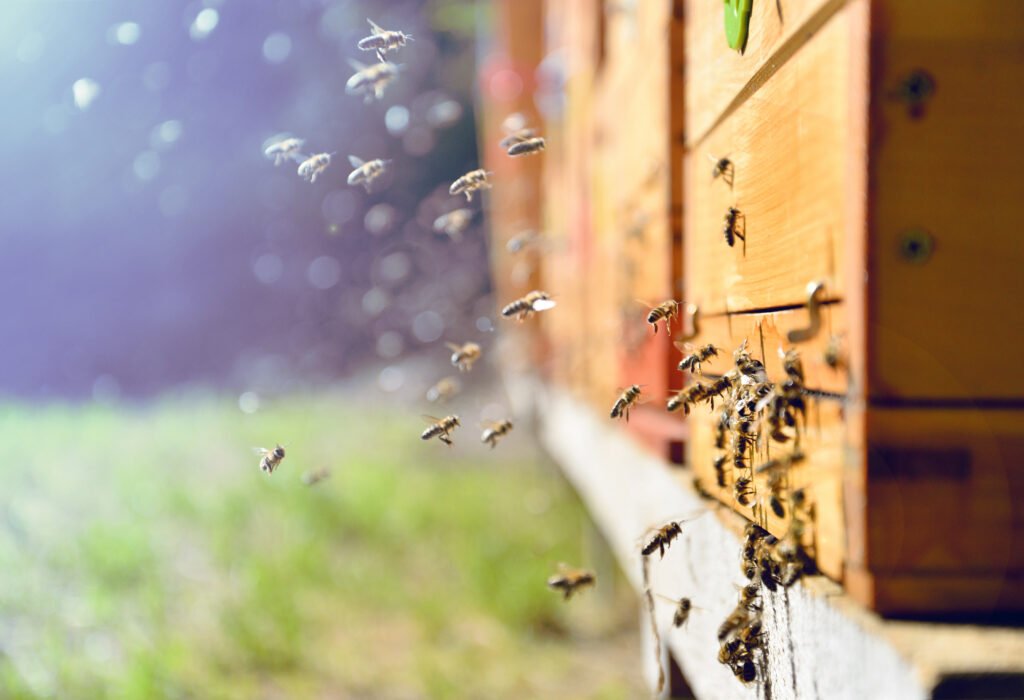
We spend our days elbow-deep in honeybee hives across DFW, so it’s not often something in the bee world surprises us — but stingless bees still get a “wait, really?” out of most folks the first time they hear about them. It’s a fair reaction. A bee that can’t sting sounds made up.
It’s not. Here’s what’s actually going on.
What Are Stingless Bees, and What Do They Look Like?
Stingless bees are a real group of bees — mostly found in tropical climates, not North Texas — that are usually black or dark brown. Like honeybees, they live in colonies and build their nests out of wax they produce from the pollen they collect. What sets them apart is right there in the name: their stinger is reduced or absent, so they defend the hive by biting instead of stinging.
How Stingless Bees Help the Environment
Stingless bees do a lot of the same quiet work honeybees do:
- Pollination — they’re major pollinators of crops like coffee, cacao, and mangoes, plus countless native plants.
- Honey with a different profile — stingless bee honey has long been used in traditional medicine in the regions where these bees are native, though we’ll leave the medical claims to the researchers who study it.
- Ecosystem balance — like every bee species, they’re part of a web that a lot of agriculture depends on.
Any Danger to People?
Since they don’t sting, the main risk with stingless bees is a mild allergic reaction for people who react to bee proteins generally — and, less pleasantly, they can carry bacteria or viruses on their bodies as they move from place to place, the same as most insects that travel between environments. For most people, though, they’re one of the more harmless bees you’ll ever come across.
Are Stingless Bee Populations at Risk?
Yes — like a lot of pollinators, stingless bees are under pressure from habitat loss and a changing climate, and some researchers are watching their numbers with real concern. The usual advice applies here too: nesting spaces, fewer pesticides, and pollinator-friendly plants all help.
What This Means If You’ve Got Bees in Texas
Here’s the honest answer: if you’re dealing with bees in North Texas, they’re not stingless bees — those are a tropical species you won’t find in a DFW attic. What you’ve got is almost certainly a European honeybee colony, and possibly one with some Africanized genetics mixed in (more on that below). Either way, the right move is the same one we’d give for any hive: don’t try to handle it yourself.
We’re a beekeeping family — we’ve spent over 45 years learning bees, not just removing them. If you’ve got a swarm or a hive somewhere it shouldn’t be, tell us what you’re seeing and we’ll walk you through your options, honestly, before anyone heads your way.