
Bee Venom Therapy — What It Is, and What We Do
Informational — we're beekeepers, not clinicians
What BVT is, what the evidence does and does not show, and why we supply bees rather than administer treatment.
- BBB Accredited A+
- 5-year warranty on hive removal
- Same-day service most days
Read this part first, because it shapes everything below. Little Giant Beekeepers does not administer bee venom therapy and does not offer medical advice. We keep bees. Bee venom therapy is a medical decision, it carries a real risk of severe allergic reaction, and it belongs with a licensed healthcare provider who knows your history.
This page exists because people ask us about BVT constantly, and because it matters to our family. It is here to explain what the practice is, what the evidence does and doesn't support, and what our actual role is.
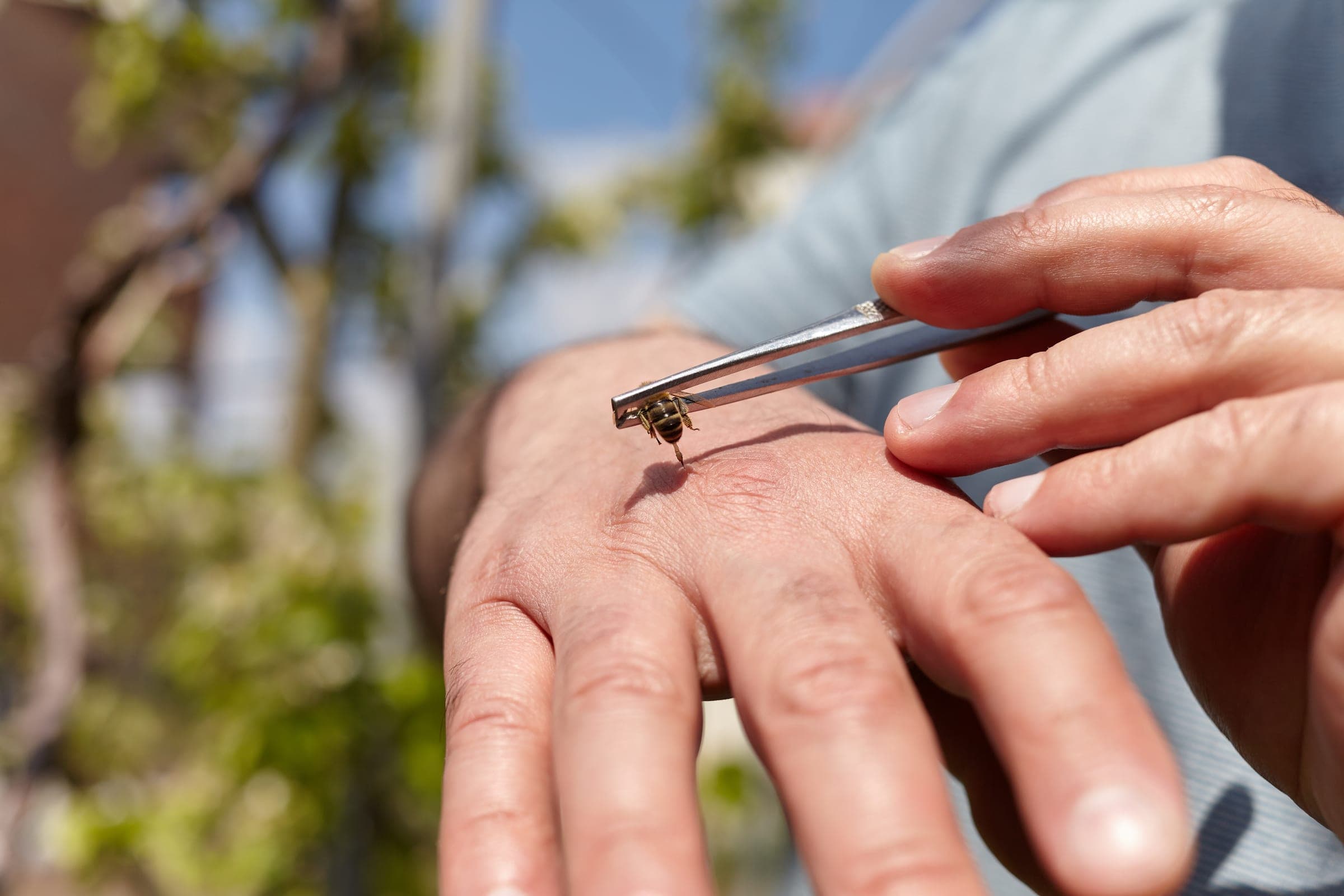
What bee venom therapy is
Bee venom therapy, or BVT, is the deliberate introduction of small controlled amounts of honeybee venom into the body, in the hope of provoking an anti-inflammatory or pain-relieving response. It's a branch of apitherapy, and it's old — versions of it appear in written medical traditions going back centuries.
Bee venom is a complex mixture. The components most often discussed are melittin, apamin and adolapin, which have measurable anti-inflammatory and analgesic effects in laboratory settings. What laboratory activity means for a person with a chronic condition is a much harder question, and it's the question the research has not settled.
In practice BVT takes three forms: live bee stings, applied by a practitioner at specific points; injectable venom preparations used in clinical settings; and topical creams containing venom or venom fractions. Practitioners who favour live stings argue the full natural delivery matters. That's a position held within the apitherapy community rather than a settled research finding, and it's worth knowing which you're being offered.
The live-sting form has a cost that deserves stating plainly: the bee dies. Anyone who works with bees for a living feels that, and the practitioners we know treat it with a seriousness we'd want you to expect.
Esther's story — why this page exists
From Esther Davis, owner of Little Giant Beekeepers
My interest in bee venom therapy started in 1995, with one conversation I've never been able to put down.
I was at the American Beekeeping Convention in Austin, competing to become American Honey Queen and represent the honey and beekeeping industries. There was a booth there belonging to Pat Wagner — known across the bee community simply as "The Bee Lady." She had one purpose: to tell her story to anybody who would stand still for it. I stood there in complete awe.
Pat's account, as she told it, was this. She had been diagnosed with multiple sclerosis at nineteen and had spent years bedridden — no movement in her legs, blind, deaf in one ear, without bladder control, too weak to feed herself. And there she was in front of me at fifty-five, walking with a cane, full of life and full of sass, telling me she had been in remission for years and crediting ongoing bee venom therapy for it.
I have been telling people about Pat Wagner ever since. She spent the rest of her life sharing what she'd learned with people living with arthritis, MS, fibromyalgia, tendonitis and much else, and she wrote it down in her book Bee Well. One passage from it has stayed with me for thirty years:
"The most remarkable characteristic of bee venom is the presence of the neurotransmitters dopamine, serotonin and norepinephrine, which along with the peptide apamin, facilitate nerve transmission and healing in conditions involving nerve disorders."
I want to be careful about what I'm telling you here. Pat's recovery was Pat's own account of her own life, and one person's experience — however extraordinary, and however much it changed how I think — is not evidence that a therapy works. It's the reason I started paying attention, not proof of anything.
Thirty years on I'm finally able to pursue this properly: studying it, and planning to keep training with practitioners internationally. It's one of the most interesting chapters of my life. It's also why I won't oversell it to you.
What the research actually shows
Bee venom and its components have been studied for immune and inflammatory effects, and conditions investigated include rheumatoid arthritis, multiple sclerosis, Lyme disease, fibromyalgia and chronic pain syndromes, Parkinson's symptom relief, and inflammatory skin conditions such as eczema and psoriasis.
"Investigated" is doing real work in that sentence. Much of the evidence is laboratory or animal research. Human trials tend to be small, and results are mixed. BVT is an alternative therapy, not an established medical treatment, and no responsible person should tell you otherwise. If a page or a practitioner presents it as a cure for a serious illness, that by itself tells you something about them.
The American Apitherapy Society is a reasonable starting point if you want to read further — apitherapy.org.
The risks, stated properly
Bee venom is pharmacologically active, which is the entire premise of the therapy and also the reason it can hurt you.
- Anaphylaxis is the serious risk. A severe allergic reaction to bee venom can be life-threatening and can develop in someone with no prior history of reacting. This is the single reason BVT requires medical supervision and an emergency plan, not a willing friend.
- It isn't suitable for everyone. People with known bee sting allergies, cardiac conditions, or immune and autoimmune disorders are commonly advised against it. Pregnancy, and interactions with immunosuppressants and other medications, are conversations for your physician.
- Expected effects are still effects. Local swelling, redness, itching, fatigue and flu-like symptoms are commonly reported, and can be significant.
- Never do this alone. Not at home, not from a video, not on a friend's recommendation. Nothing on this page is a protocol.
What Little Giant Beekeepers does and doesn't do
What we do: keep healthy bees, and work toward being able to make bees available for BVT sessions carried out under the direction of a qualified provider. We're glad to talk about bees, about what a session involves logistically, and about what we've learned from practitioners.
What we don't do: diagnose, treat, prescribe, administer stings, recommend protocols, or tell you whether BVT is right for your condition. We aren't medical providers and we won't pretend to be. If you want to know whether this is a reasonable thing for you to try, that answer comes from your doctor.
If you're exploring it, the order that makes sense is: talk to your physician first, agree a plan and an emergency protocol with them, and work out the bees afterwards. That sequence isn't us being cautious for the sake of it — it's the sequence that keeps the risk manageable.
What people ask us about BVT
Do you administer bee venom therapy?
Can I buy bees from you for BVT?
Is bee venom therapy safe?
Does BVT work?
Can BVT cure multiple sclerosis or arthritis?
Do you sell bee venom, creams or ointments?
Where we handle bee venom therapy
Besides bee venom therapy, we also handle
Bees won't wait — and neither should you.
Call now for your bee removal needs and you'll have your price before we pull into your driveway. No bait and switch. No pressure. Just the truth and your call — from a beekeeping family that's been doing this for over 45 years.