
Honeybee Swarm Removal and Pickup
The cheapest bee call you can make
A resting swarm has days, not weeks, before it moves into a structure. Same-day pickup across DFW, relocated alive.
- BBB Accredited A+
- 5-year warranty on hive removal
- Same-day service most days
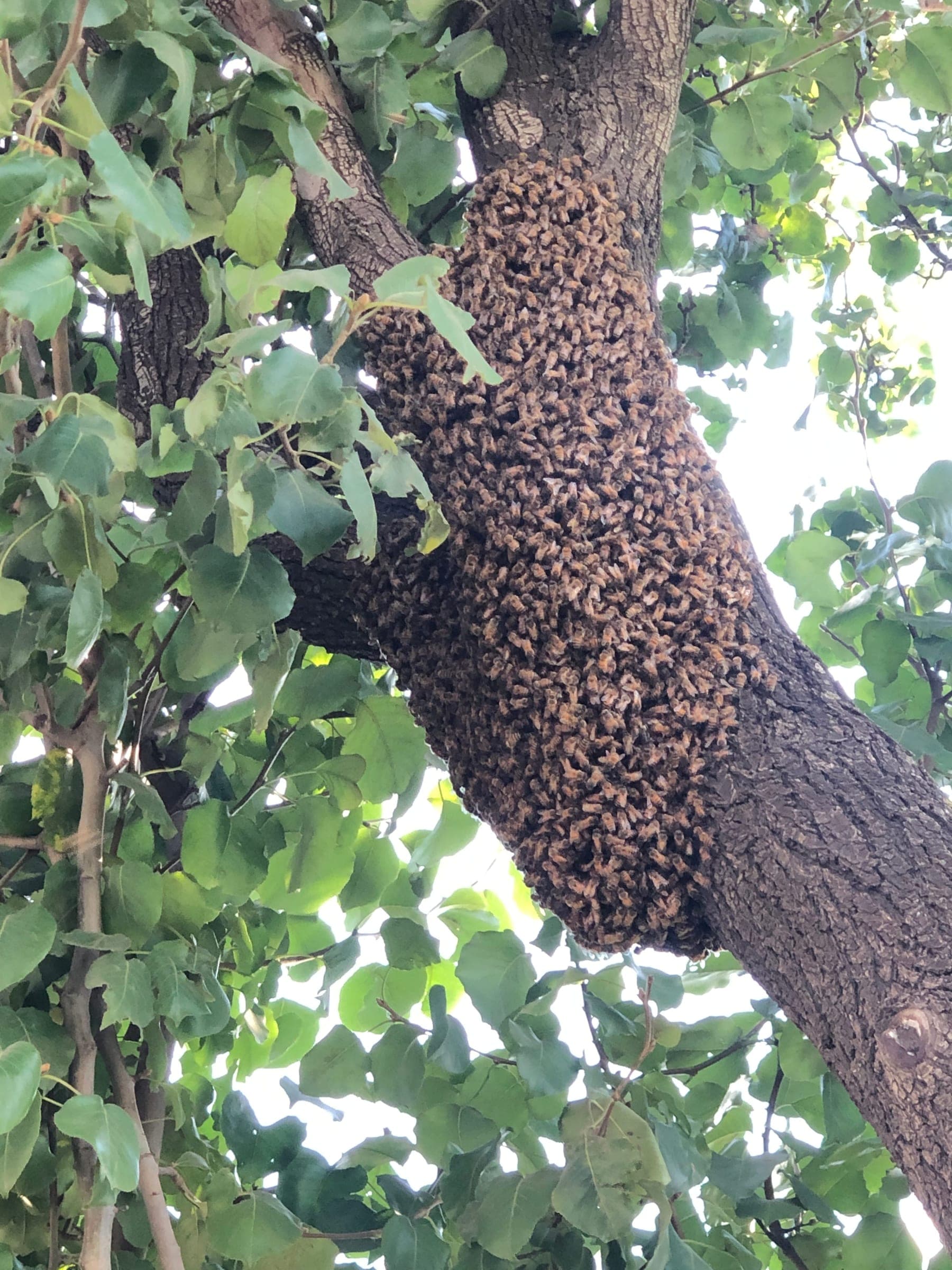
A swarm is a colony that outgrew its box. A new queen hatches, and half the old hive leaves with the retiring queen to find somewhere else to live. What lands on your fence post is a colony in transit, carrying a few days of food and no home yet.
That last part is the whole reason to call quickly. A swarm has nothing to defend, which makes it the calmest and cheapest bee job there is. Give it a week and it's inside your soffit, and it becomes the most expensive one.
Why swarms show up in spring
Swarming runs from roughly March to June here, tracking the first real nectar flow. Colonies build up fast on spring forage, run out of room, raise a new queen, and split. It's a sign of a healthy hive, not a sick one — which is why we'd much rather catch these than lose them.
You'll see them most often in the middle of a warm day, and often twice: once when the swarm settles somewhere obvious while scouts go looking, and again days later when it moves into whatever the scouts found. The gap between those two events is the window you want to use.
Where swarms land, and where they end up
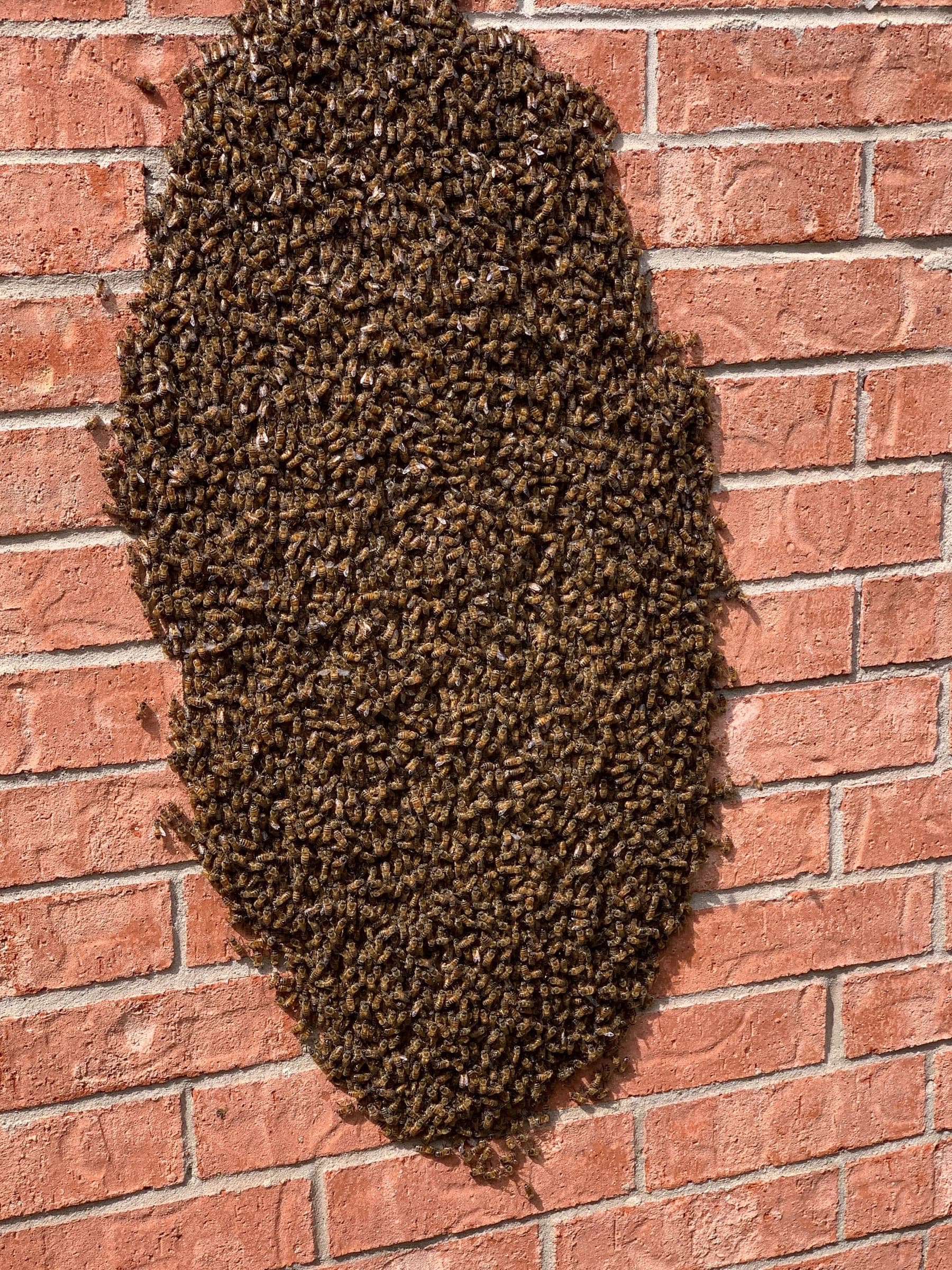
The resting spot is usually in plain sight and slightly absurd — a branch, a fence rail, a wing mirror, a child's swing, a gas meter, a patio umbrella. It's temporary. Scouts are meanwhile checking the cavities on your property.
What they're shortlisting: soffit and roofline voids, brick weep holes, attic gaps, chimneys, water-meter boxes, sheds, compost bins, and any wall cavity with a gap the width of a pencil. Once they commit and start drawing comb, you no longer have a swarm — you have a colony in a structure, which is a hive-out and a repair.
What to do until we get there
- Keep your distance and keep it boring. A resting swarm is about as docile as bees get, but it's still tens of thousands of insects. Give it a few metres and it will ignore you.
- Don't spray it, hose it or smoke it. Water and insecticide turn a calm cluster into a defensive one, and a poisoned swarm can't be relocated — so a fixable, low-cost job becomes a dead colony and a mess.
- Move the people, not the bees. Bring pets and children indoors, shut nearby windows, and if it's over a footpath or a doorway, park a chair in the way so nobody walks into it.
- Tell your neighbours. Swarms are alarming to look at, and someone reaching for a can of spray is the main way these end badly.
- Photograph it from a distance. Size, height and what it's hanging from tell us what gear to bring and let us price it on the phone.
How we collect and relocate a swarm
Four steps, and most jobs are done inside an hour once we're on site.
- We size it up on the phone. How big, how high, how long it's been there, what it's attached to. That's usually enough to quote you before anyone gets in a truck.
- We collect the cluster. Ideally the queen and the bulk of the bees go into a box in one motion, and the stragglers follow her scent in over the next few minutes. Height and what it's clinging to decide whether that's simple or slow.
- We move them to an apiary. The swarm goes to one of our sites or to a local beekeeper who wants it, gets a proper box, and spends the rest of the season doing what it was trying to do anyway.
- We point out what to seal. Before we leave we'll show you the cavities the scouts were interested in. Closing those is the difference between this being a one-off and an annual event.
What it costs, and why it's the cheap one
Swarm pickup is the lowest-cost job on our price list, and you'll have the exact figure before we set off — not a range, and not a number that grows when we see it in person.
The reason it's cheap is that there's nothing to dismantle. No wall to open, no comb to cut out, no honey to clean up, no insulation to replace, no repair afterwards. Every one of those appears the moment the swarm moves in somewhere, which is why we push people to call the same day they see it rather than waiting to see whether it sorts itself out.
Keeping bees yourself? We're often placing more swarms than we have room for in season. If you want one, say so when you call and we'll let you know what's available.
What people ask us about swarms
Is a honeybee swarm dangerous?
How long will a swarm stay in my yard?
Will the swarm leave on its own if I ignore it?
Do you kill the bees you collect?
How fast can you get out to a swarm?
There's a swarm at my business — can you come during hours?
Where we handle honeybee swarm removal
Besides honeybee swarm removal, we also handle
Bees won't wait — and neither should you.
Call now for your bee removal needs and you'll have your price before we pull into your driveway. No bait and switch. No pressure. Just the truth and your call — from a beekeeping family that's been doing this for over 45 years.