
The Bee Rescuer
We rescue honeybee colonies instead of killing them — taken out alive and relocated to our own apiary. A DFW beekeeping family since 1980.
Most people who find bees in a wall do not want them killed. They want them gone, and they would rather that meant somewhere else than dead. That is the whole job here: taking a colony out alive and giving it somewhere to live.
We are a family of beekeepers, not an extermination company. Little Giant has been doing this across North Texas since 1980, and rescue is the part of the work we are actually known for.
What a bee rescue involves
A rescue is not spraying and walking away. Spray leaves the comb and the honey inside your wall, and that is exactly what draws the next colony to the same spot next spring.
A real rescue means opening the space, finding the queen, and moving the colony out intact:
- Find where they actually are. Bees enter at one point and build somewhere else. The entry hole is rarely where the comb is.
- Open the cavity. Soffit, wall void, chimney chase, shed wall, tree limb — whatever they have moved into.
- Take the colony out alive, queen included. Without her the rest will not settle in a new hive.
- Remove the comb and honey, then seal the way back in so it does not happen again.
- Put the structure back the way we found it.
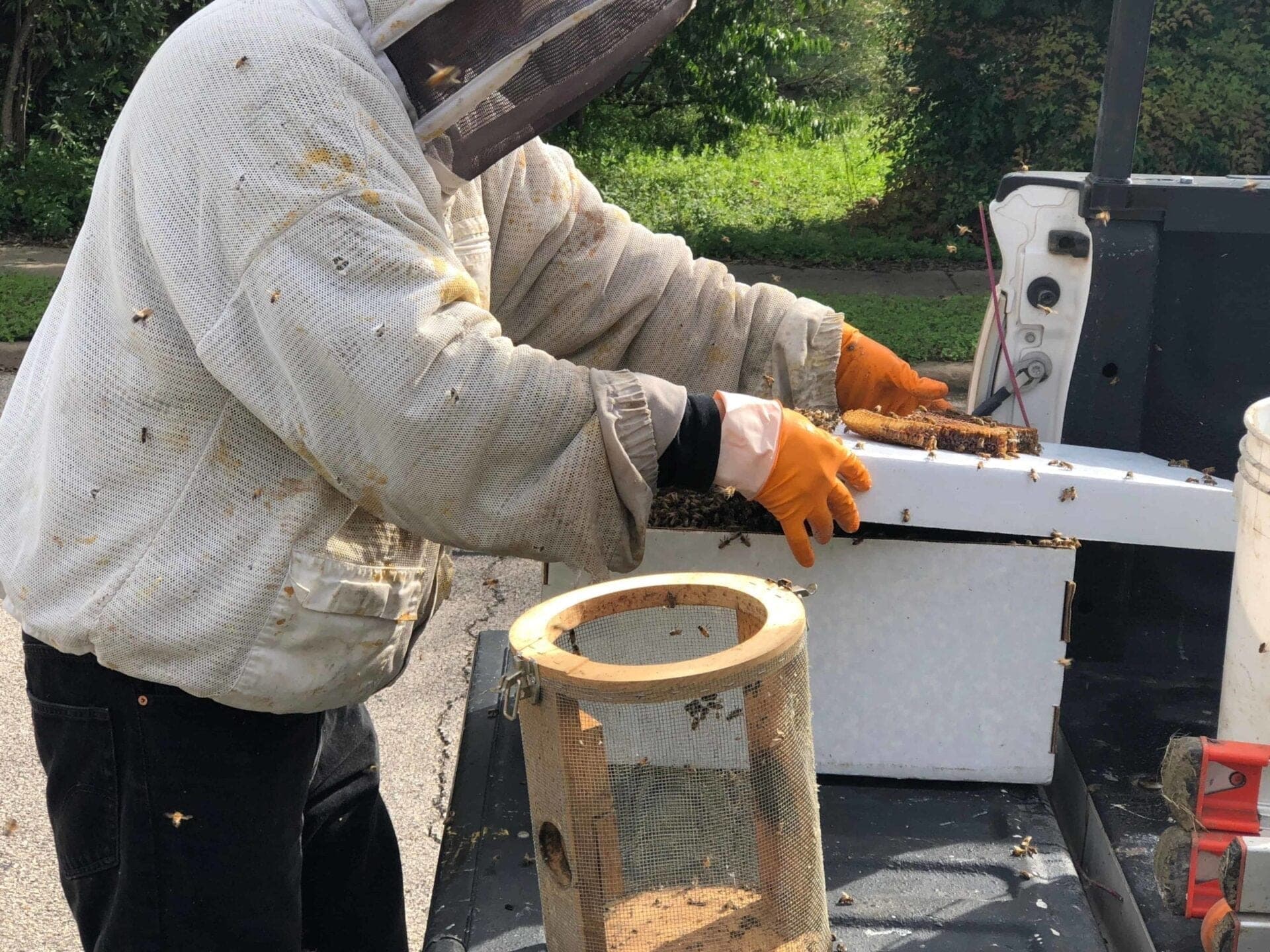
The comb is not thrown away either. Where it is sound it goes into a hive box with the colony, so the bees keep the brood they have already raised.
Where the rescued bees go
They go to our own apiary. That is the part people ask about most, and it is the reason we can call this a rescue rather than a relocation on paper.
Colonies that come through well are kept and worked like any other hive. Some are rehomed to other beekeepers once they have settled and proved healthy. None of them are destroyed for convenience.
When rescue is possible — and when it is not
This is where we would rather be straight with you than sell you something we cannot deliver.
Most honeybee colonies can be rescued. If they are reachable and the colony is healthy, live removal is almost always the right call, and it is what we would do at our own house.
Some cannot. A colony in a spot that cannot be opened safely, one that has turned genuinely aggressive, or one too far gone to survive the move — we will tell you that plainly and explain the alternative rather than quote you a live rescue and then not perform one.
Wasps and hornets are not a rescue job at all. There is no colony to save and nothing to relocate, so wasp and hornet work is treated as what it is: clearing a hazard. We do not dress it up as something kinder.
The easiest rescue is the earliest one
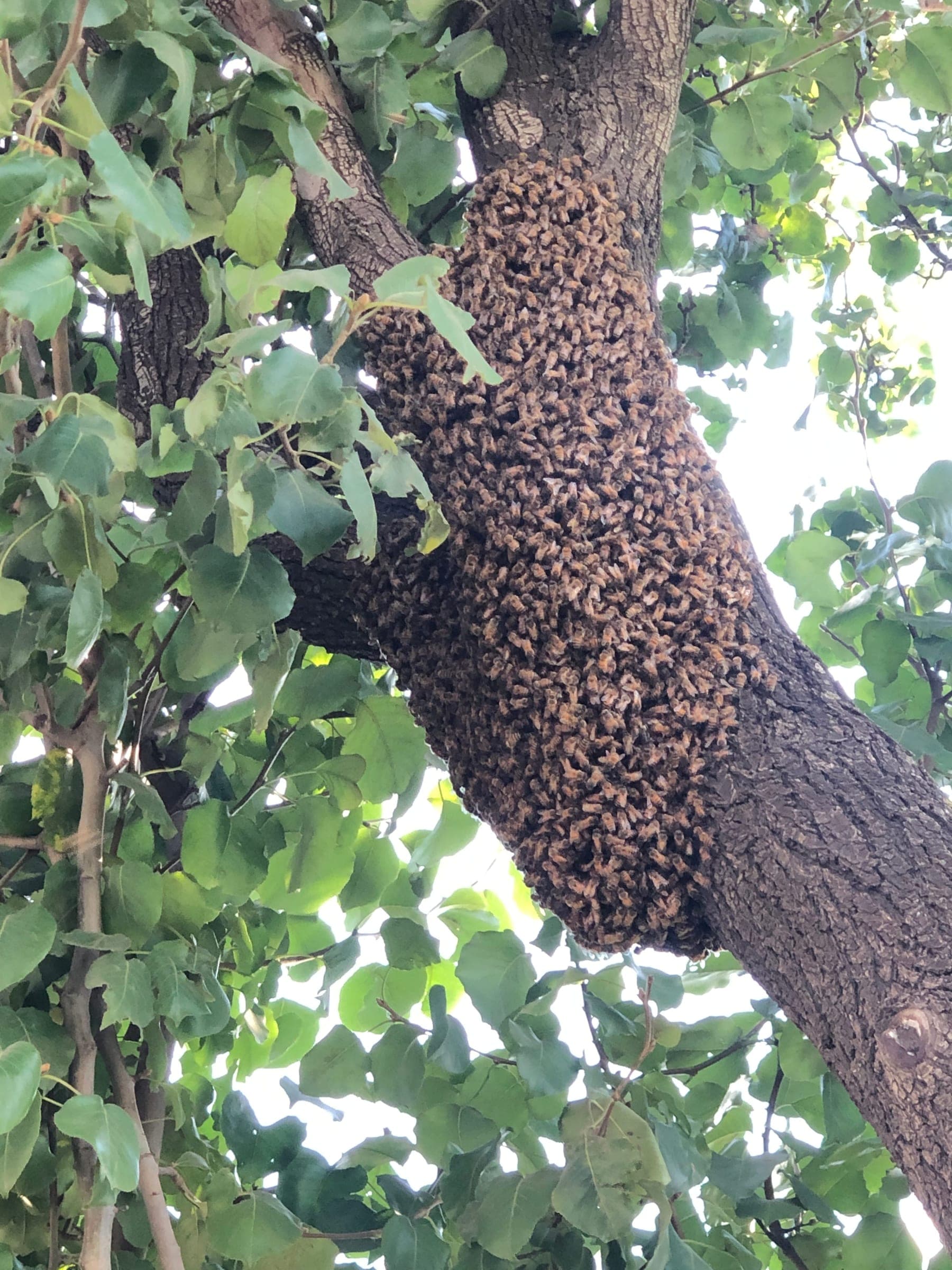
A swarm hanging on a branch, a fence, a mailbox — that cluster has not built anything yet. There is no comb in your wall, no honey to clean out, no structure to open.
That makes swarm pickup the fastest and cheapest call you can make, and the one with the highest chance the whole colony survives. A swarm that is left alone for a week is usually a wall job by the time we see it.
If you are looking at a clump of bees that arrived today, call now rather than next weekend.
Why it is worth doing properly
Honeybees pollinate a great deal of what grows in North Texas, and a colony that has survived a Texas summer in a wall is a colony worth keeping. That is the beekeeping argument.
The practical one matters to you more: a rescue done properly ends the problem. The comb is out, the cavity is sealed, and the scent trail that draws the next swarm to the same soffit is gone. Spraying ends the bees in your wall this month and books you a repeat visit next spring.
Every hive removal we do is guaranteed in writing for five years.
Talk to an actual beekeeper
Tell us what you are seeing and where, and we will tell you honestly whether it is a rescue, a hazard, or something you can leave alone. You will know exactly what it costs and exactly what we will do before anyone leaves to come out.
See how live bee removal and hive-outs work, or read about the family behind it.
Bees won't wait — and neither should you.
Call now for your bee removal needs and you'll have your price before we pull into your driveway. No bait and switch. No pressure. Just the truth and your call — from a beekeeping family that's been doing this for over 45 years.