
Bee Hives for Sale — Rescued Colonies
Rescued colonies, rehomed
Established colonies rescued from removals across DFW, rehomed to new beekeepers with the help to get started.
- BBB Accredited A+
- 5-year warranty on hive removal
- Same-day service most days
Most of the bees we take out of walls, soffits and trees don't need destroying — they need somewhere to go. We keep them, requeen or rebuild them where necessary, and sell the ones that come good as working hives.
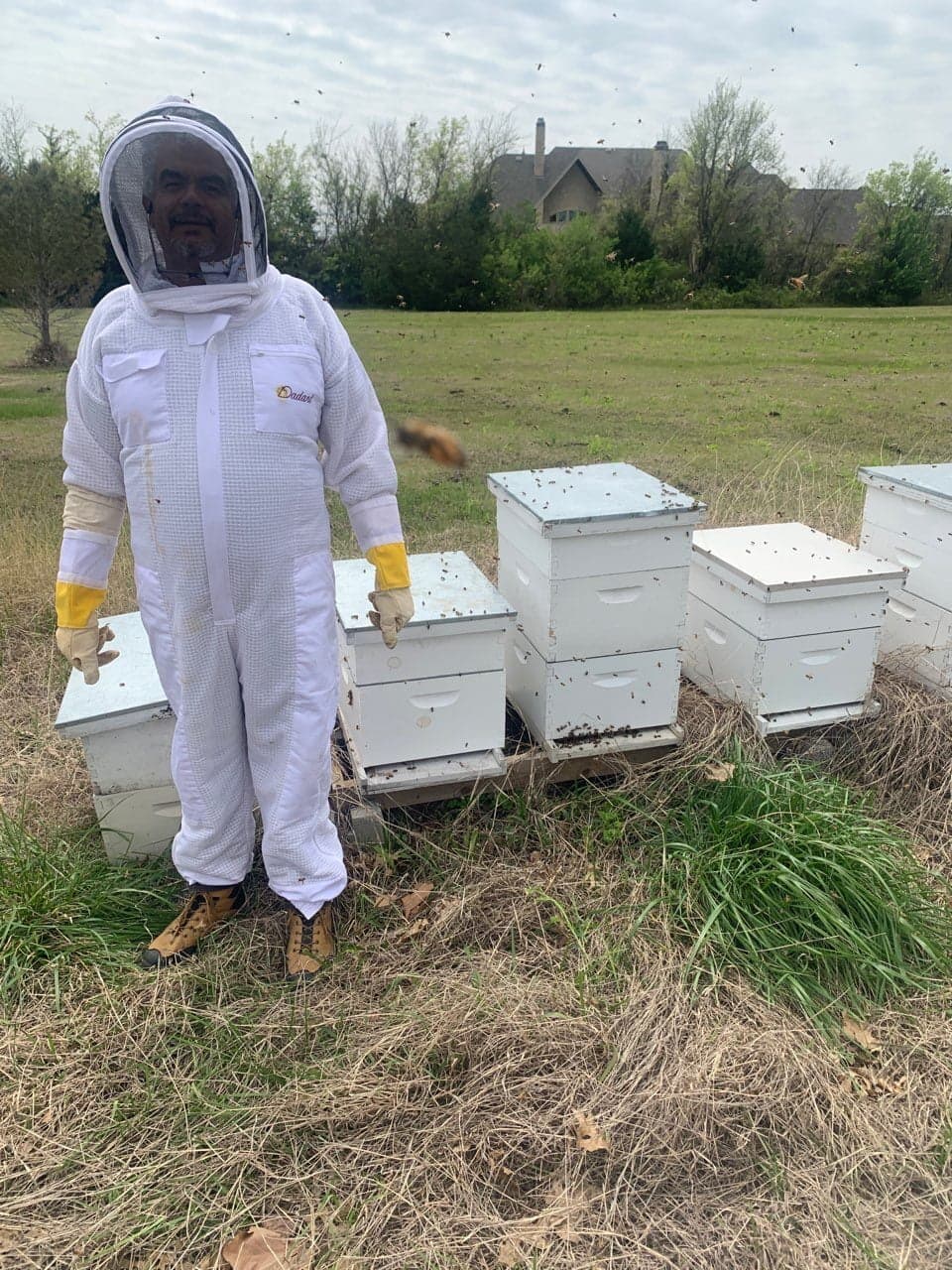
So a hive from us isn't a mail-order package of bees. It's an established colony that was living in somebody's chimney in Plano a few months ago, now in a proper box and ready to keep going.
What you get
Each hive we sell goes out as a functioning colony, not a starter kit:
- A strong laying queen, with brood in the frames to prove she's laying.
- The workers and drones that came with her — a colony that's already established rather than one you're hoping will build up.
- Drawn comb on frames, in boxes, so you're not waiting weeks for the bees to build foundation out before anything happens.
- A walkthrough when you collect it — how to site it, how to open it, what a healthy frame looks like, and what to do in your first month.
We'd rather sell you a colony you can manage than the biggest hive on the yard. If you tell us this is your first, we'll point you at a calmer one.
Why buy a rescued colony
They're local bees that already survived here. These are colonies that made it through a North Texas summer in a wall cavity with no help from anyone. Genetics that cope with this heat and this forage are worth more than a package shipped in from another climate.
Buying one is the reason the rescue is worth doing. Live removal costs more in time and care than treatment does. Every hive that gets rehomed is one that justifies doing removals the slow way.
You start further along. A package or a nuc spends its first weeks building comb and building numbers. An established colony with drawn comb and a laying queen is doing the actual work sooner.
Who this suits — and who it doesn't
Honestly: an established colony is a good first hive and a bad first weekend. It's more bees than a nuc from the outset, which means it's more forgiving of a mistake but less forgiving of being ignored.
A good fit if you've done some reading, you have somewhere sensible to put it — full sun to dappled shade, a water source, and space to stand behind it — and you're prepared to open it every couple of weeks through spring and summer.
Worth waiting if nobody in the household is comfortable with the idea yet, if you're not sure about neighbours or an HOA, or if you haven't got a veil, smoker and hive tool. None of that is a hard no. It's just easier in that order.
If you're on acreage, there's a different reason to keep bees on your land: a beekeeping ag exemption can reduce the property tax on 5 to 20 acres substantially, and we manage those hives for you rather than selling them to you. See beekeeping ag exemption.
Availability and pricing
Availability follows removal season rather than a catalogue. Spring and early summer are when the swarms and removals come in, so that's when we have the most to rehome; by late season the yard is thinner and what's left is usually spoken for.
Pricing depends on the colony — how strong it is, what the queen situation is, and what boxes and frames go out with it. Call and tell us what you're after and we'll tell you what we have and what it costs, the same way we quote everything else: the number before you commit, not after.
We'll also say when we've got nothing worth selling you. A weak colony in August is not a bargain, and we'd rather you came back in March.
After you take it home
You get our number, and we mean it. First-season questions are the ones that decide whether a hive survives, and they're rarely complicated — usually "is this normal?" with a photograph attached.
We also run workshops and events through the year and can put you in touch with beekeepers near you. Beekeeping goes considerably better with somebody local to ask, and after 45 years of doing this around Dallas–Fort Worth we know most of them.
What new beekeepers ask us
Are rescued bees more aggressive than bought bees?
Do I need any special equipment before I collect a hive?
How much honey will I get in the first year?
Can you deliver and set up the hive?
What if the queen fails or the colony dies?
Do you sell honey or just hives?
Where we handle hives for sale
Besides hives for sale, we also handle
Bees won't wait — and neither should you.
Call now for your bee removal needs and you'll have your price before we pull into your driveway. No bait and switch. No pressure. Just the truth and your call — from a beekeeping family that's been doing this for over 45 years.