
Bee Removal in Dallas–Fort Worth
Saved when we can. Removed when we can't.
Swarms, colonies inside walls, and full hive-outs with the repair afterwards. Every option priced before we set off.
- BBB Accredited A+
- 5-year warranty on hive removal
- Same-day service most days
When there are bees in your house you really have two questions: can they be saved, and what is this going to cost. We answer both before we leave the shop — because a price you hear after a truck is already in your driveway isn't a price, it's a negotiation.
We're a beekeeping family. We've been doing this across Dallas–Fort Worth since 1980. We save honeybees whenever the situation allows it, and when it doesn't we tell you why instead of selling you a live removal we can't deliver.
Save them or remove them — it's your call
Every job starts the same way: we work out what you actually have, then give you each option with a price attached. You pick. Nothing starts before you've heard the number.
Live removal and relocation
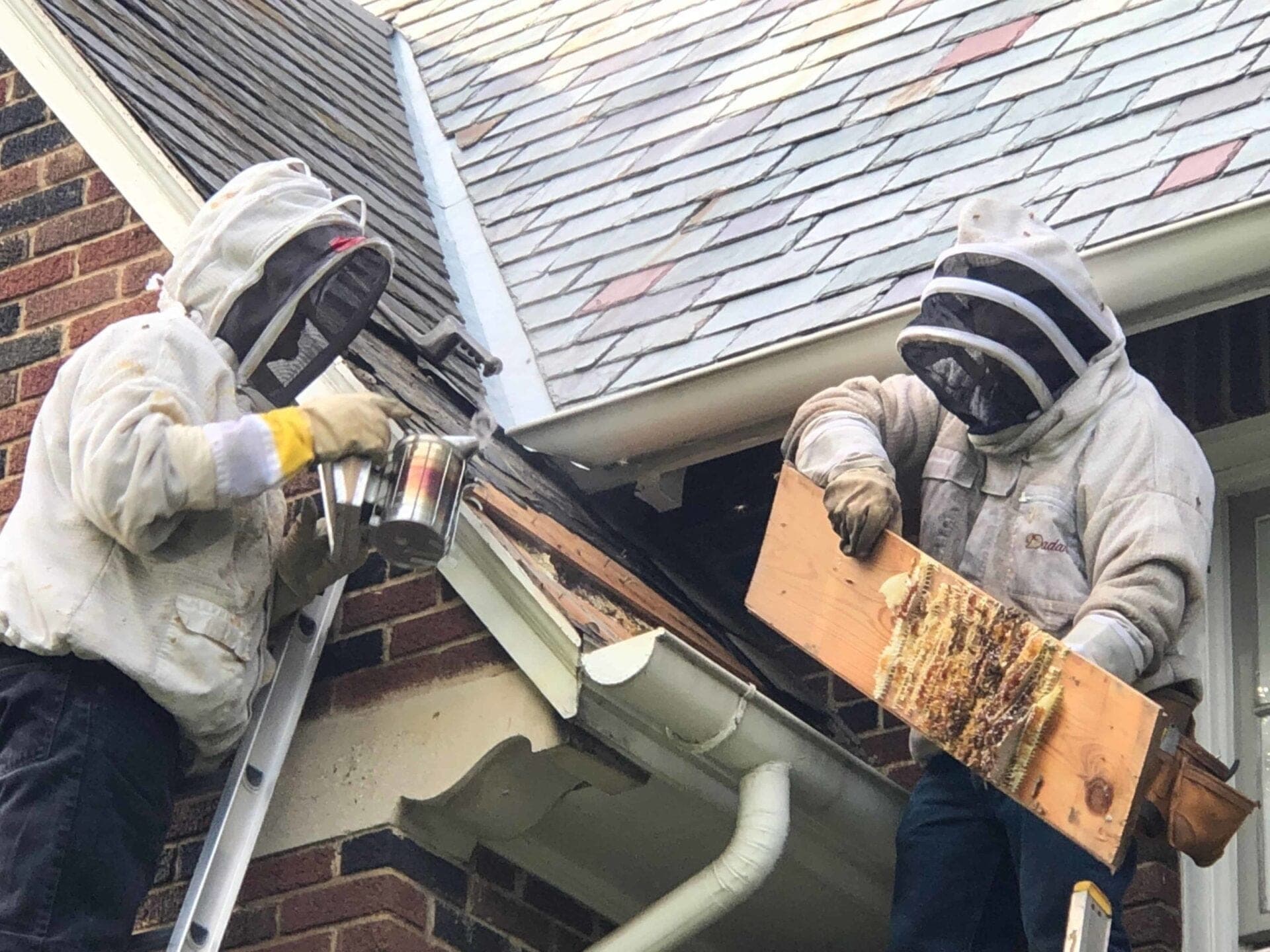
We extract the colony with bee-vacs built for the job and move it to a local apiary. The bees live. This is our first choice every time the situation allows it — the colony's accessible, it isn't defensive beyond what we can manage, and there's somewhere for it to go.
Turn-key hive-out and repair
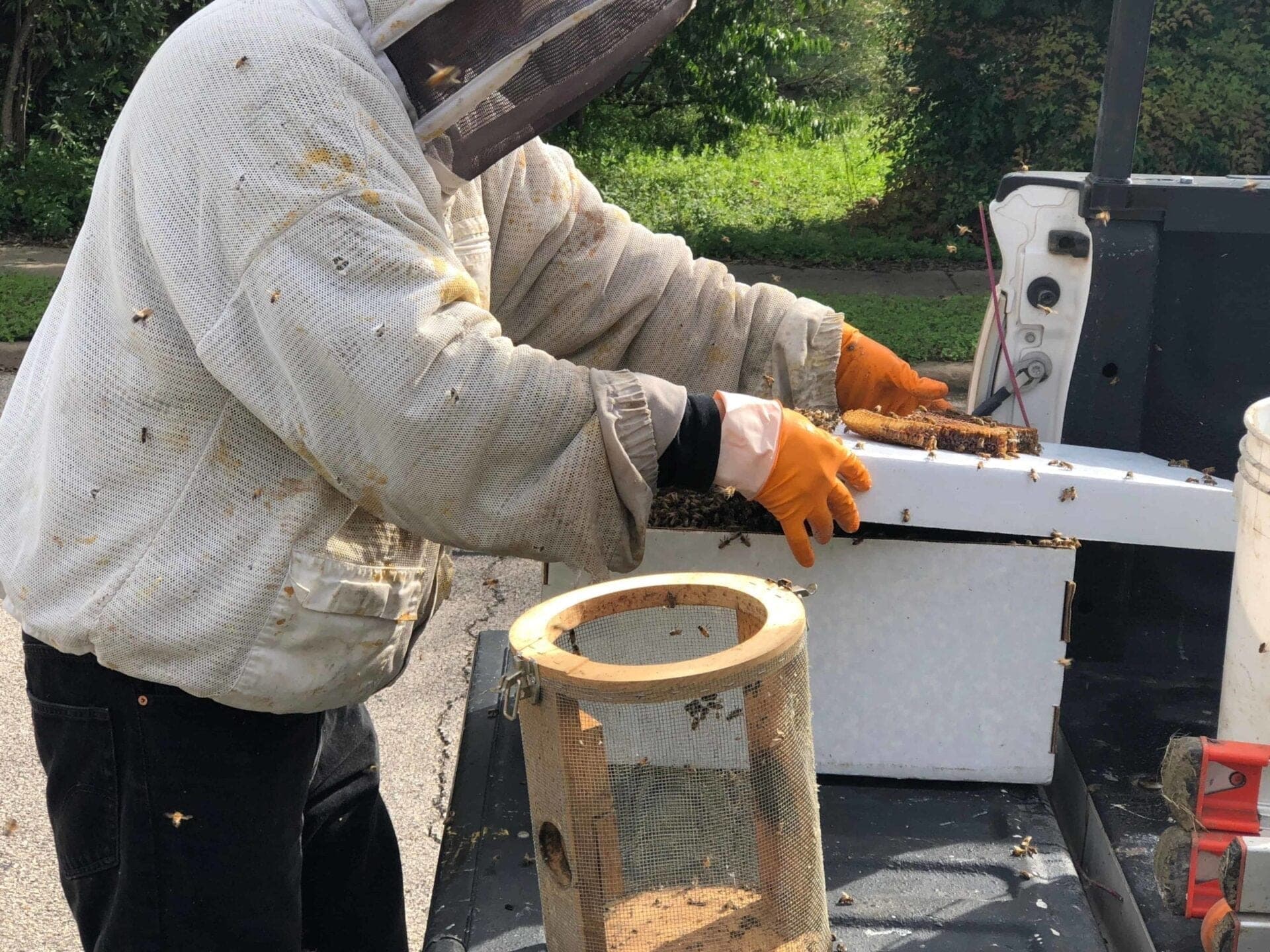
Bees in a wall, soffit, chimney or roofline. We open the cavity, take out every bee, all the comb, the honey and the larvae, clean it, re-insulate and close it back up the way we found it. Nothing left inside to melt, stain or draw the next pest in.
This matters more than people expect. Kill a colony in a wall and leave the comb, and you've swapped a bee problem for a slow one: honey seeping into drywall through a Texas August, and roaches, ants and rodents arriving for it.
Swarm pickup
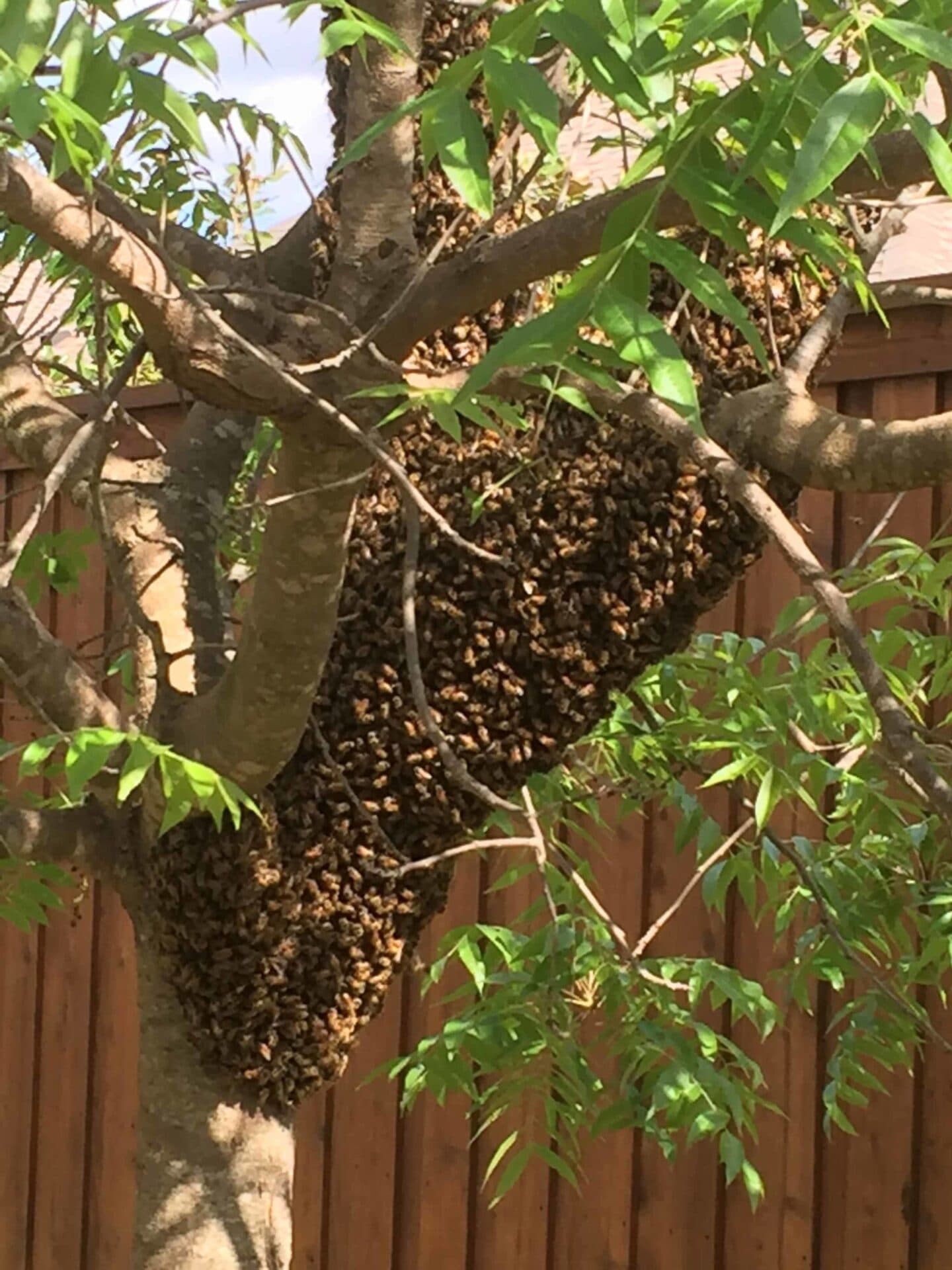
A swarm hanging in the open hasn't moved into anything yet, which makes it the cheapest call on this page. It's also the one with a clock on it — see honeybee swarm removal for what to do while you wait for us.
Treatment, when relocation isn't honest

Sometimes a colony is too defensive, too deep into a structure, or in a spot where nothing can be extracted alive. Then treatment is the right answer, and we'll say so and explain what led us there. We'd rather lose the sale than promise a rescue we can't perform.
Why calling early costs you less
In a Texas summer a colony can build workable comb inside a wall in about a week. That's the whole economics of this job.
A swarm caught in the open is an hour's work. The same colony three weeks later is inside your wall. Three summers later it's a structural repair with honey-stained drywall and insulation to replace. The bees don't get harder to remove — the building does.
So call when you first see them, not when you've decided they're a problem. We'll tell you honestly which stage you're at, and if it turns out you can leave them alone, we'll tell you that too.
What bee removal costs in DFW
It depends on the situation, and any company that quotes you a flat number over the phone without asking where the bees are is guessing. What we can do is tell you what drives the price — and give you the exact figure before we set off.
| What we're doing | Where it sits on price | What it involves |
|---|---|---|
| Swarm pickup | Easiest and lowest cost | Bees resting in the open with no comb built. Fastest to resolve, and the window is days, not weeks. |
| Live removal or treatment | Mid-range | Colony is established. Price follows where it is (wall vs. soffit vs. tree), how we reach it, and how big it is. |
| Full hive-out and repair | Most comprehensive | Comb and honey inside a structure. Includes opening up, removal, cleaning, insulation and putting it back. |
Our promise: you get the exact price before we leave to come to you. Not a range, not an estimate that grows on arrival. The number we say is the number you pay.
Bees, wasps, or something else?
Honeybees are the ones we most want to save, and they're also the ones people most often don't have. What you've got changes the approach, so it's worth thirty seconds:
- Honeybees — round, fuzzy, amber and black. Build wax comb with honey in it. These are the ones we relocate.
- Bumblebees — bigger, rounder, very hairy. Small nests, usually in the ground or a compost pile, and they're gone by autumn. Often the honest answer here is to leave them.
- Carpenter bees — large and shiny, look like bumblebees with a bald abdomen. They bore round holes into decks, fascia and eaves. Males bluff and can't sting; the females can. The real problem is the woodwork.
- Wasps and hornets — hairless, narrow waist, no wax comb. Different job entirely: see wasp and hornet removal, red wasps or yellow jackets and hornets.
Not sure? Describe what you're seeing on the phone — colour, size, where they're going in and out, whether there's visible comb. We can usually name it before anyone drives anywhere.
The honest answers
Do you save the bees or kill them?
How much does bee removal cost in DFW?
How fast can you get here?
Do I need a full hive-out, or just treatment?
There are bees in my brick weep holes — what now?
Do you work weekends?
Is bee removal covered by my homeowner's insurance?
Where we handle live bee removal
Besides live bee removal, we also handle
Bees won't wait — and neither should you.
Call now for your bee removal needs and you'll have your price before we pull into your driveway. No bait and switch. No pressure. Just the truth and your call — from a beekeeping family that's been doing this for over 45 years.