
Bee and Wasp Removal in Houston, Texas
Harris County — a beekeeping family since 1980
We are a Dallas–Fort Worth beekeeping family, roughly 240 miles from Houston. Here is what we can honestly do, and how to judge whoever you call locally.
- BBB Accredited A+
- 5-year warranty on hive removal
- Same-day service most days
Worth saying before anything else: we are a Dallas–Fort Worth beekeeping family, with all four offices in the metroplex, roughly 240 miles north of Houston. We are not going to promise same-day service down there, because we cannot deliver it.
Why Houston is harder on structures than Dallas
This part is genuinely useful wherever you end up hiring, because it changes what the job involves.
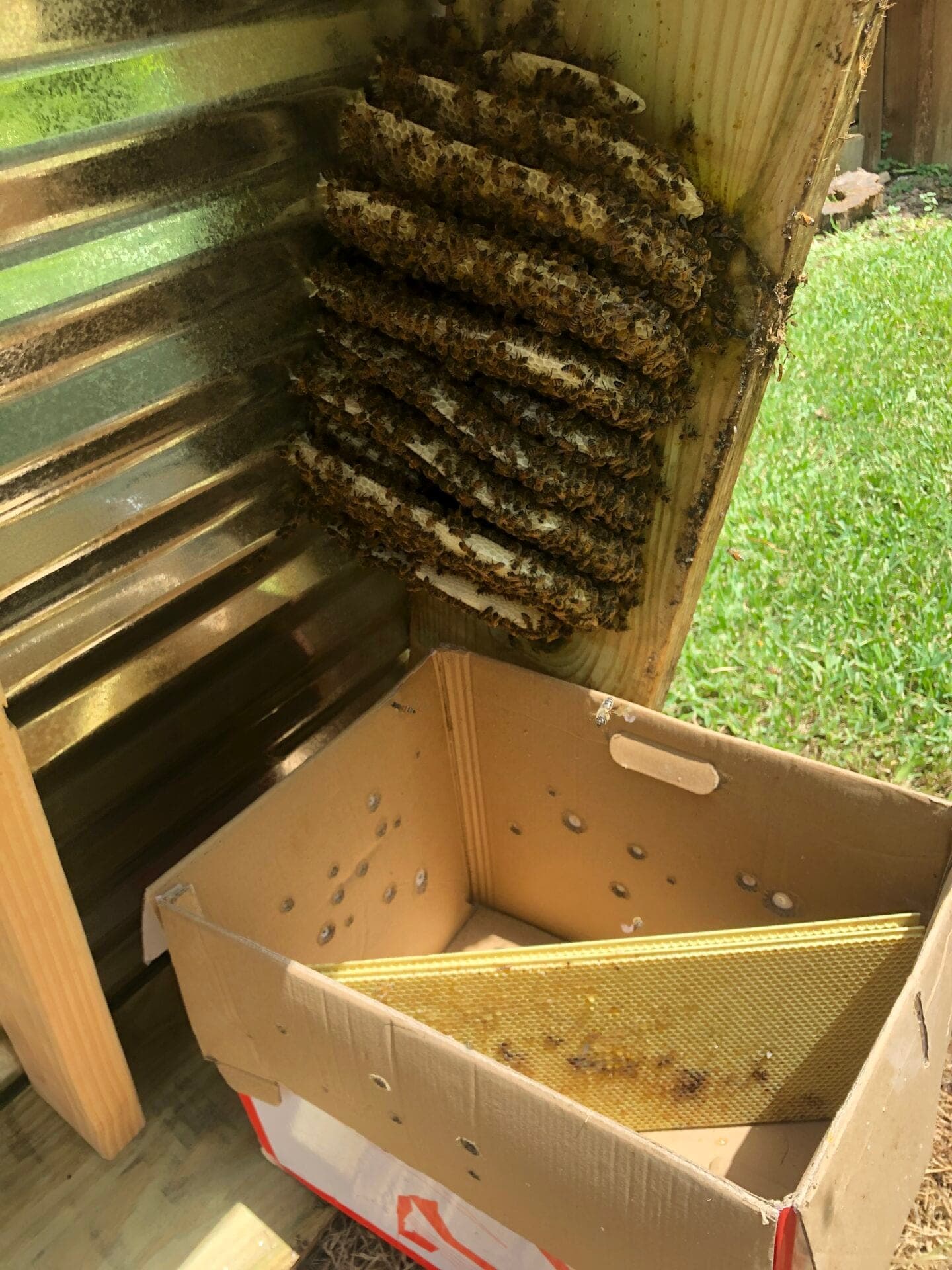
Houston's humidity and long warm season mean colonies build faster, stay active later in the year, and the comb they leave behind behaves differently. Up here a colony killed inside a wall leaves comb that melts and stains through one hot summer. On the Gulf Coast the same comb holds moisture, and the honey residue and damp wax together are a far better invitation to mould, ants and roaches than anything we deal with in North Texas.
The practical consequence: in Houston, leaving the comb in the wall is a worse decision than it is anywhere else in the state. If a company quotes you to kill the bees and stop there, that is the one quote to walk away from.
What we will actually do for a Houston call
Ring us and you will get a beekeeper who will work out what you have — a swarm in the open, an established colony in a structure, or wasps — and tell you honestly whether it is worth us travelling.
Usually it isn't, and we will say so and help you find someone closer. Where a trip makes sense is planned work rather than an emergency: several colonies on one site, a commercial property, or a job a local outfit has already turned down. That gets scheduled, with the travel cost known before anyone commits.
How to judge whoever you do call
- Ask what happens to the comb and honey. In Houston this matters more than anywhere. Removal means the wax and honey come out of the cavity, not just the bees.
- Ask whether they will save the colony. An accessible honeybee colony can usually be extracted alive. Reaching for insecticide first is the fast option, not the right one.
- Ask who closes up the wall. A hive-out means opening a soffit, wall or chimney. Establish before they start who re-insulates and makes it good.
- Ask for a firm price before they leave. Not a call-out fee with the real figure quoted from your driveway.
- Ask how they assess a defensive colony. The Gulf Coast has a meaningful proportion of Africanized colonies. A competent local beekeeper will have a clear answer.
What to do right now
A swarm hanging in the open has days, not weeks, before it moves into something. Keep people and pets clear, don't spray it, and call a local beekeeper today — many collect swarms for very little because they want the bees.
Bees going in and out of brickwork or a soffit is an established colony. The cost curve only goes one way, and in Houston's climate it goes there faster.
Wasps are a removal job, not a rescue. Judge on access and safety.
Anyone in the household allergic? Treat an active nest near a door or path as urgent, and stay away from it.
Where we actually work
Dallas–Fort Worth and the surrounding North Texas counties, from four offices across the metroplex. If you are up this way, or you own land up here, that is where we can genuinely help — see the areas we cover, or read how live bee removal works so you know what a proper job looks like before you book one locally.
Houston questions we get asked
Do you actually service Houston?
Why keep this page up at all?
Does the humidity really change the job?
Are Africanized bees a concern in Houston?
Can you recommend a Houston beekeeper?
Bee & wasp removal services we offer in Houston
Areas near Houston we also cover
Bees won't wait — and neither should you.
Call now for your bee removal needs and you'll have your price before we pull into your driveway. No bait and switch. No pressure. Just the truth and your call — from a beekeeping family that's been doing this for over 45 years.